
Headless WordPress vs. Hybrid Architectures: Strategic Value vs. Unnecessary Expense
In modern web development, the Headless approach has become one of the most widely discussed trends. Decoupling the traditional WordPress monolith seems highly compelling on paper: we retain the intuitive WP admin panel for content editors while offloading the frontend to modern, high-performance JavaScript frameworks like Next.js, Nuxt, or React.
However, behind the promises of lightning-fast performance and infinite customization options lie significant architectural challenges, infrastructure complexity, and substantial budget increases. Let’s break down how this architecture works under the hood, where hybrid setups deliver a real return on investment (ROI), and where going Headless turns into an unjustified money pit.
Understanding Headless WordPress and How It Differs from a Monolith
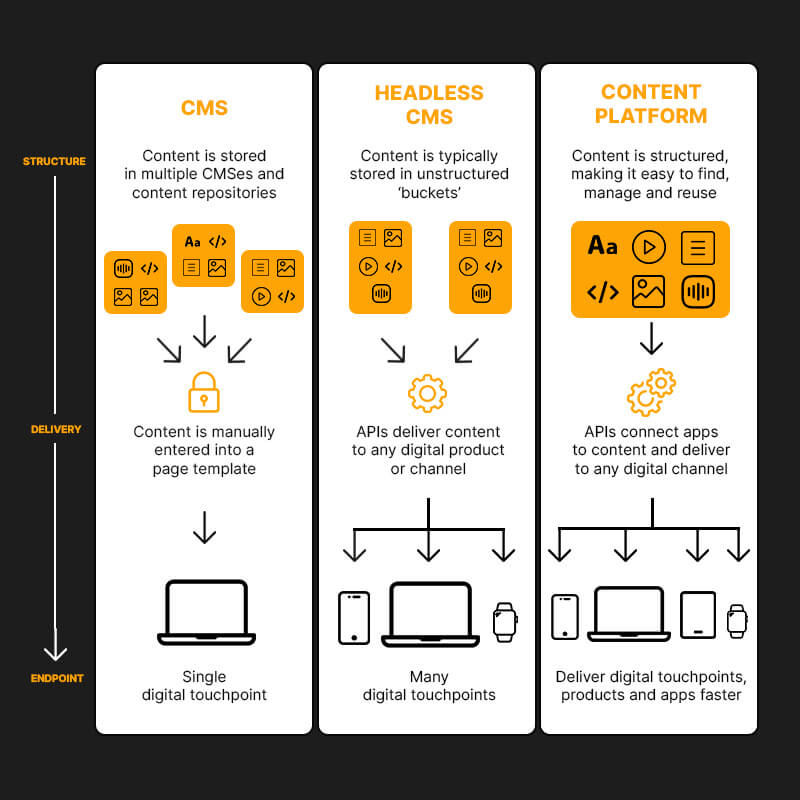
In a classic (monolithic) architecture, the server performs both duties: executing MySQL/MariaDB queries to retrieve content and rendering ready-to-serve HTML pages to the user via PHP theme templates.
In a Headless architecture, the application is decoupled into two independent layers:
- Backend (Head): WordPress is utilized strictly as a Headless CMS. It manages content, handles user authentication/permissions, and exposes data over APIs (via the native WP REST API or GraphQL).
- Frontend (Body): The user interface is built using modern JavaScript frameworks (such as Next.js, Remix, or Nuxt.js) and hosted independently (for instance, on Vercel, Netlify, or a dedicated Node.js server).
Architectural Comparison
| Parameter | Classic WordPress (Monolith) | Headless WordPress (Decoupled) |
| Page Rendering | Server-side (PHP execution per request or Nginx FastCGI cache output) | SSG (Static Site Generation), ISR (Incremental Static Revalidation), or Node.js SSR |
| Component Coupling | Tightly coupled (Theme + Plugins + Database) | Fully decoupled API layer |
| Security Surface | Admin dashboard and public frontend share the same domain/server | Backend is completely isolated from public-facing web traffic |
| Plugin Compatibility | Plugins render UI forms and widgets out of the box | Most plugins require custom API endpoints to render frontend UI |
| Maintenance Cost | Low / Medium | High (requires dedicated Node.js, React/Vue, and WP API expertise) |
When Headless Is a Justified Business Investment
Headless architecture yields maximum technical and economic value only when a traditional monolithic setup hits hard architectural boundaries.
1. Omnichannel Content Distribution
If your content needs to be published simultaneously across multiple touchpoints—such as web, native mobile apps (iOS/Android), smart displays, IoT devices, or third-party partner portals—WordPress serves as a single source of truth, while individual frontend client applications fetch data via REST API or GraphQL.
2. Aggressive Core Web Vitals & Conversion Requirements
In hyper-competitive verticals (like Fintech or B2C SaaS), cutting load times by even 200ms directly drives conversion rates. Static Site Generation (SSG) with Next.js deployed on an edge CDN delivers near-instant Time to First Byte (TTFB) and First Contentful Paint (FCP).
3. Enterprise-Grade Security Requirements
Under a Headless setup, the WordPress administrative panel can be hidden behind an isolated subdomain or restricted within a corporate VPN/LAN network. Because the public site has zero direct connection to the WordPress file system or MySQL database, attack vectors targeting popular WP plugin vulnerabilities are virtually eliminated.
4. Complex SPA/PWA Interactive Interfaces
If your project is not merely an informational website but an interactive web application (e.g., custom calculators, dynamic customer portals, or interactive product configurators) that requires smooth client-side state management without full-page reloads.
When Headless Is a Waste of Budget
Despite its technical merits, going Headless will create more overhead than benefits for roughly 80% of standard web projects.
1. Standard WooCommerce Stores
WooCommerce was inherently engineered for monolithic deployments. Moving WooCommerce to a Headless stack breaks several key features out of the box:
- Payment gateway integrations and shipping calculators (you must build custom frontend components for each gateway SDK).
- Native product filtering, variable product attributes, and promotion engine plugins.
- Dynamic cart management and user session handling without writing a complex custom middleware layer.
Exception: Enterprise E-commerce projects ($50k+ engineering budgets) where WooCommerce acts solely as a PIM/OMS system backend.
2. Marketing-Driven Projects Relying on SEO & Rapid Edits
In traditional WordPress, a marketer can spin up a landing page in Gutenberg, Elementor, or Bricks within minutes, adjust meta tags via Yoast/RankMath, embed tracking pixels, and launch campaigns immediately.
In a Headless setup:
- Draft Live Previews require complex webhook configurations and cache revalidation pipelines.
- Visual Page Builders lose their native frontend editing capabilities.
- SEO metadata, Schema.org microdata, and Open Graph tags must be manually parsed and rendered on the Next.js side.
3. Limited Engineering and Support Budgets
Maintaining a Headless website requires managing two distinct technical stacks concurrently:
- WordPress Infrastructure (PHP runtime, MySQL optimization, REST API endpoint tuning, security patches).
- Node.js/React Infrastructure (CI/CD build pipelines, SSR deployments on Vercel/DigitalOcean, npm package dependency audits).
The Strategic Alternative: The Hybrid Approach
If you want the performance and reactivity of custom React components without abandoning native WP features or inflating maintenance costs, a Hybrid Architecture is often the optimal choice.
How the Hybrid Architecture Works:
- Core Application Remains a Monolith: Page routing, SEO, standard content pages, blog posts, and visual layout editing run on a high-performance WordPress theme (such as custom Gutenberg blocks or lightweight builders like Bricks).
- Dynamic Modules Are Injected Incrementally: Complex interactive components (e.g., product filters, real-time calculators, client dashboards) are developed as standalone React/Vue micro-apps and mounted into targeted DOM nodes on the page, communicating asynchronously with WordPress via REST API.
// Example: Mounting a custom React component inside a Gutenberg block
function render_custom_calculator_block() {
    wp_enqueue_script('app-calculator', get_template_directory_uri() . '/build/calculator.js', array(), '1.0', true);
    return '<div id="react-calculator-root" data-api-nonce="' . wp_create_nonce('wp_rest') . '"></div>';
}
add_shortcode('custom_calculator', 'render_custom_calculator_block');
Decision-Making Framework
Ask these 5 key questions before selecting your stack:
- Do you have dedicated Node.js/React developers who understand WP REST API on staff or retainer?
- Yes — Headless is viable.
- No — Maintenance will become an ongoing bottleneck.
- Do you need to syndicate WordPress content across native apps or IoT devices?
- Yes — Headless is justified.
- No — Stick to Monolith or Hybrid.
- Is absolute backend isolation required for strict corporate compliance?
- Yes — Headless delivers maximum perimeter security.
- No — A proper Server WAF + Nginx caching layer is completely sufficient.
- Is total editorial freedom in Gutenberg / Bricks critical for your content marketing team?
- Yes — Monolith / Hybrid.
- No — Headless.
- Is the business prepared for a 2.5× to 4× increase in initial engineering costs?
- Yes — Evaluate the projected ROI of a Headless architecture.
- No — Opt for high-grade monolithic engineering with server-side caching.
Summary
Headless WordPress is a powerful engineering paradigm suited for mature digital products, large-scale media portals, omnichannel services, and custom enterprise web applications.
For the vast majority of commercial WordPress websites and WooCommerce stores, the highest ROI is achieved through a finely optimized monolith (leveraging clean code and server-level caching like Redis + Nginx FastCGI Cache) or a hybrid architecture with localized SPA component integration.